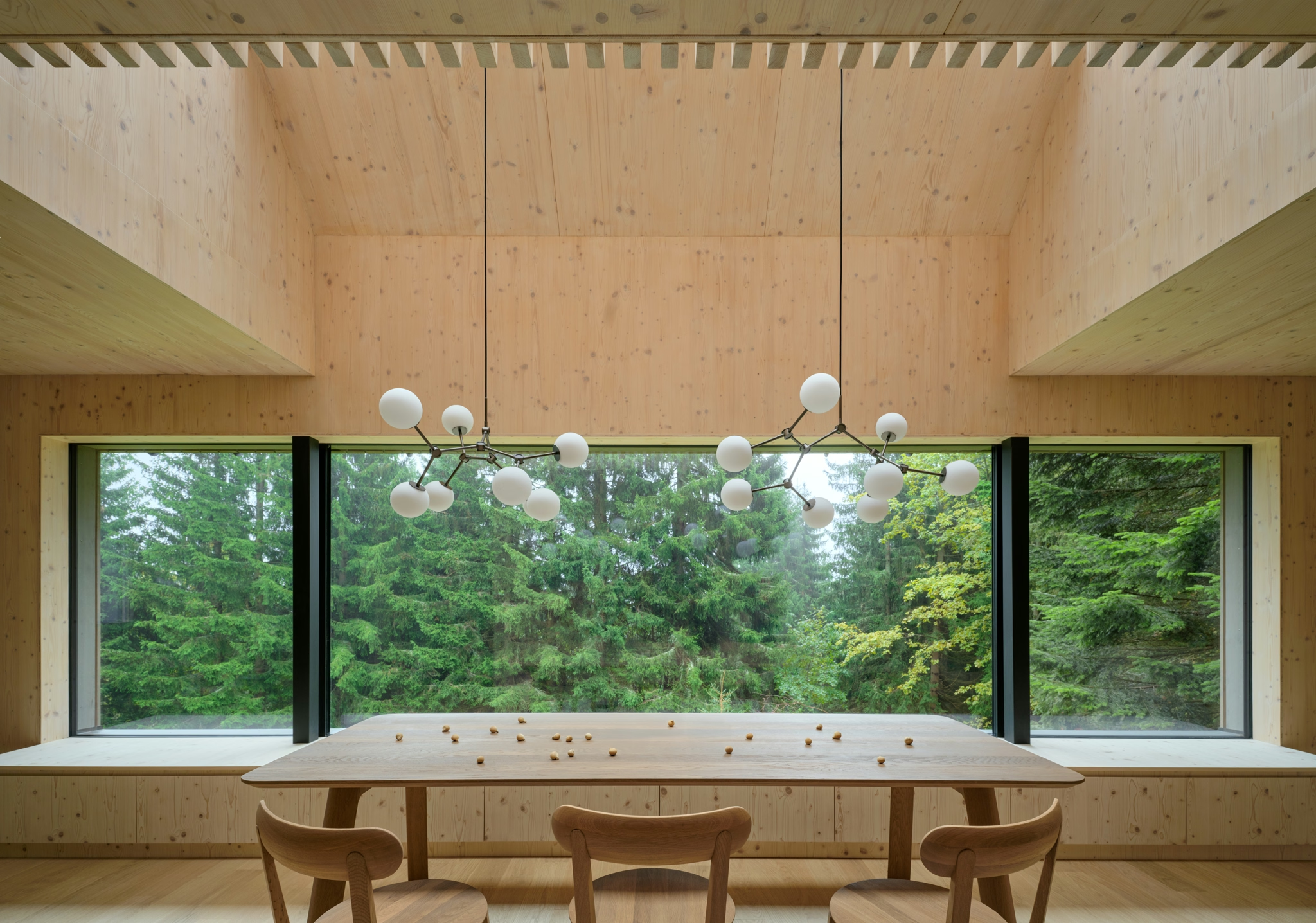
Oak is a material whose presence in an interior goes far beyond colour or grain. It has its own structure, scent, and a distinctive way of responding to its surroundings over time. This natural character is one of the reasons solid oak has been used for furniture for generations.
But what exactly does “solid oak” mean? What is the difference between solid wood, oak veneer, MDF and particleboard? And how can you recognise oak furniture designed to last for decades?
What does solid oak mean? · Solid oak vs. oak veneer and engineered boards · Why oak is used for furniture · How to recognise well-made oak furniture · Craftsmanship and modern technology · From tree to finished furniture · Solid oak dining tables · Solid oak beds · Custom-made furniture and modular systems · How to choose a manufacturer · Frequently asked questions
Solid oak is real oak wood used as the material of a particular structural component of a piece of furniture, rather than merely as a thin decorative layer applied to another supporting material.
Individual components can be made from a single piece of timber or from carefully processed and joined oak sections. In both cases, the material remains natural wood, with its characteristic structure, grain and properties.
Every piece of oak is unique. Growth rings, knots and subtle variations in colour are not imperfections, but natural features of the material. This is why no two pieces of furniture are ever completely identical.
Solid wood also remains a hygroscopic material after it has been transformed into a table, bed or chest of drawers. It absorbs and releases moisture depending on the relative humidity of the surrounding air and can therefore change its dimensions slightly. Temperature influences this process mainly indirectly, through changes in relative humidity.
A well-designed solid wood construction accounts for this natural movement from the outset.
Find out more about the origin and properties of the wood in BeOak materials.
At first glance, these materials can look very similar. Their construction and properties, however, are significantly different.
In solid oak furniture, the structural component itself is made from oak wood.
Its characteristic qualities include natural grain and texture, high strength, long service life, the possibility of surface restoration and the uniqueness of every individual piece.
Solid wood also requires experience in both construction design and processing. The manufacturer must account for the wood’s natural movement and respect grain direction, moisture content and the properties of each individual piece of timber.
Oak veneer is a thin layer of real oak wood applied to another supporting material.
Veneering is not in itself a sign of poor-quality furniture. In high-quality furniture making, it can be appropriate when dimensional stability, lower weight or a particular structural solution is important.
The main difference is that the load-bearing part of the component is not made from solid oak.
MDF is an industrially manufactured board made from fine wood fibres bonded together and pressed into a homogeneous material.
Its advantages include a uniform structure, dimensional stability and the ability to be machined with great precision. It does not, however, have the natural grain or structure of solid timber.
Particleboard is made from wood particles or chips bonded together with a binder and pressed into sheets.
It can subsequently be covered with laminate, foil or veneer and can therefore imitate different types of wood at first glance.
When choosing furniture, it is therefore not enough to look for the word “oak” in the product description. What matters is where and how real oak wood has actually been used.
Oak combines several qualities that make it particularly suitable for furniture.
Oak is a strong and durable hardwood. When correctly dried, constructed and finished, it performs well under everyday use.
This is why it is used not only for smaller interior objects but also for structurally demanding pieces such as solid oak dining tables, beds, chests of drawers, bookcases and modular storage systems.
Oak has a distinctive yet balanced structure. The character of its surface develops naturally as the tree grows, so every piece of timber has a different grain.
Good craftsmanship does not try to hide this variation. Instead, it looks for ways to use and emphasise the natural grain and structure of each piece.
One of the major advantages of solid wood is that its surface can often be restored over the lifetime of the furniture.
The method depends on the construction and finish used, but solid wood generally offers possibilities for repair, sanding and refinishing that many composite materials do not.
Find out more about everyday maintenance and the restoration of oiled surfaces in our guide to caring for oak furniture and through the BeOak furniture renovation service.
Oak ages together with the home.
Daylight, UV exposure, everyday use and natural processes within the wood can gradually influence its tone and surface character. Well-designed furniture therefore does not necessarily simply look worn after several years. Instead, it can develop its own patina.
The quality of solid wood furniture is not determined by the material alone. Equally important is how the manufacturer works with it.
Quality begins long before production itself.
It is important to know where the manufacturer sources its wood, what requirements it places on the raw material and how individual sections are selected.
With a natural material, absolute uniformity is not the objective. What matters more is the ability to select and compose individual pieces so that their grain, structure and technical properties are appropriate for their intended use.
BeOak works with European oak sourced from certified sawmills.
Correct drying is one of the most important stages in preparing solid wood.
Drying the wood too quickly or inadequately can negatively affect its future stability and lead to deformation or cracking.
At BeOak, preparation of the wood takes approximately 9 to 12 months. Around 6 to 9 months are devoted to natural air drying, followed by approximately another three months of controlled kiln drying.
The time given to the material before machining plays a significant role in how it behaves later in the finished product.
Solid wood is not a static material.
A high-quality construction therefore respects the wood’s natural response to changes in relative humidity. Joints, the thickness of individual elements and the way they are assembled must allow slight movement without compromising the function of the furniture.
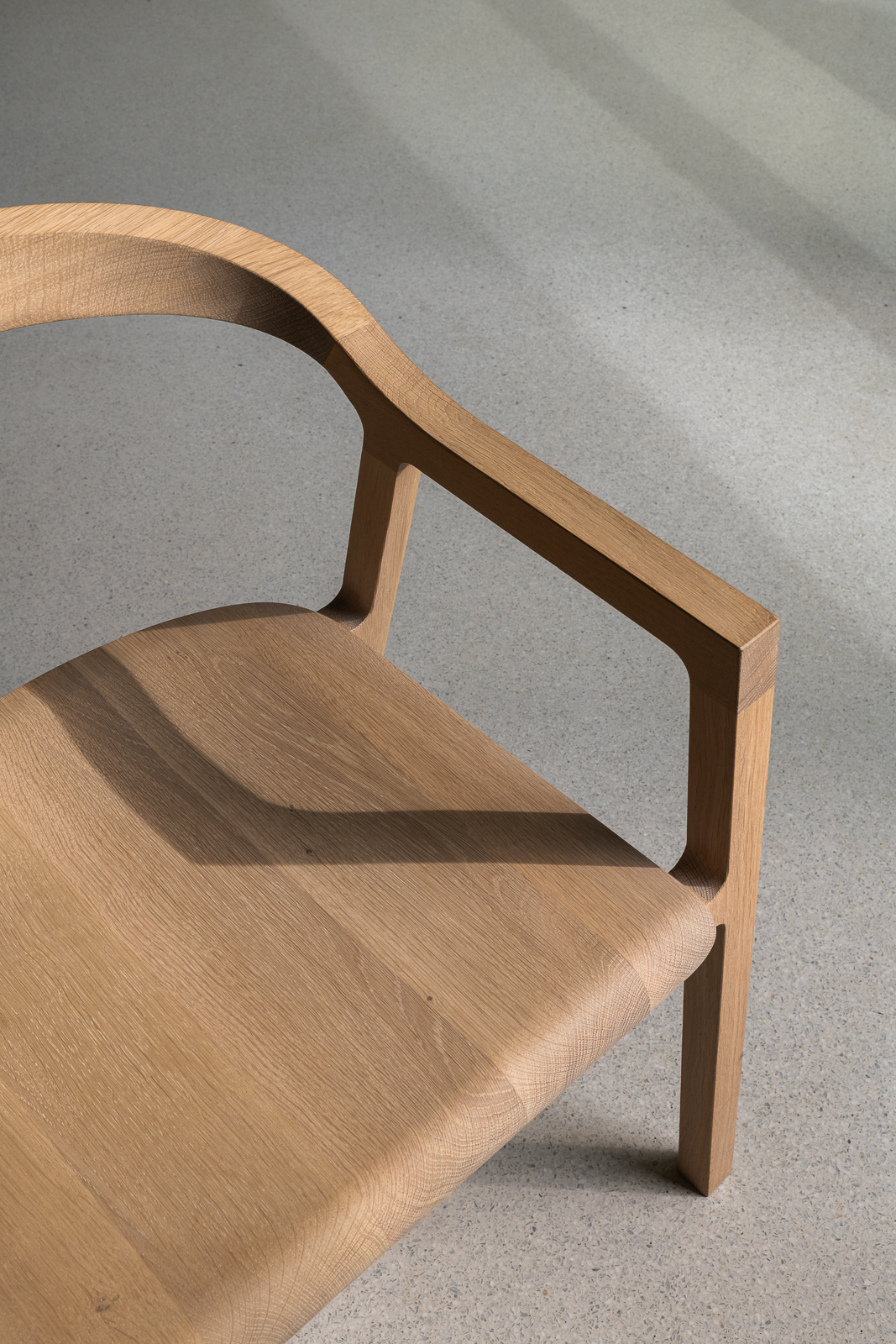
Edges, joints, transitions between individual elements and the way the construction is assembled often reveal more than a photograph of the whole piece.
This is where the manufacturer’s experience becomes visible.
Modern technologies allow solid wood to be processed with exceptional precision. The aim is not to replace craftsmanship with technology, but to combine the two.
The finish protects the wood from everyday wear while also having a major impact on its appearance and tactile character.
A well-chosen finish should respect the material, allow its grain to remain visible and suit the way the particular piece of furniture will be used.
BeOak primarily uses oiled finishes based on natural oils and waxes for its oak furniture. These preserve the natural character of the wood and allow the surface to be restored in the future.
For furniture intended to be used for many years, it is worth considering what happens later.
Can the surface be restored? Does the manufacturer provide maintenance information? Can the furniture be professionally renovated? Is the construction designed so that its life is not limited by a short-term trend?
Quality furniture is not designed only for the moment of purchase.
Traditional knowledge of the material and modern production technologies do not have to stand in opposition.
Contemporary technologies make it possible to create forms and constructions in solid wood that would have been extremely difficult to produce only a few decades ago.
At BeOak, traditional woodworking techniques are combined with tools such as five-axis CNC milling, production software and wood-texture scanning.
Five-axis CNC machining enables precise three-dimensional shaping of solid timber. This technology helps create finer edges, more complex structural solutions and organic forms while preserving the character of the natural material.
Technology is not an end in itself. It is a tool that expands the possibilities of working with wood.
The ability to control the entire manufacturing process has a major influence on the quality of solid wood furniture.
Production in Spišská Belá, today behind BeOak by Javorina, continues the tradition of Javorina, founded in 1947. The contemporary process covers the entire journey of the material, from wood selection and drying through technological production stages to hand finishing and the final surface treatment.
Read more about the history of the brand and the continuity between Javorina and today’s BeOak in Our story.
The oak comes from certified sawmills that meet requirements for material quality and origin. The aim is not to make a natural material perfectly uniform.
On the contrary. Technology and craftsmanship are used so that the natural grain, colour variation and structure of the wood remain visible in the finished product.
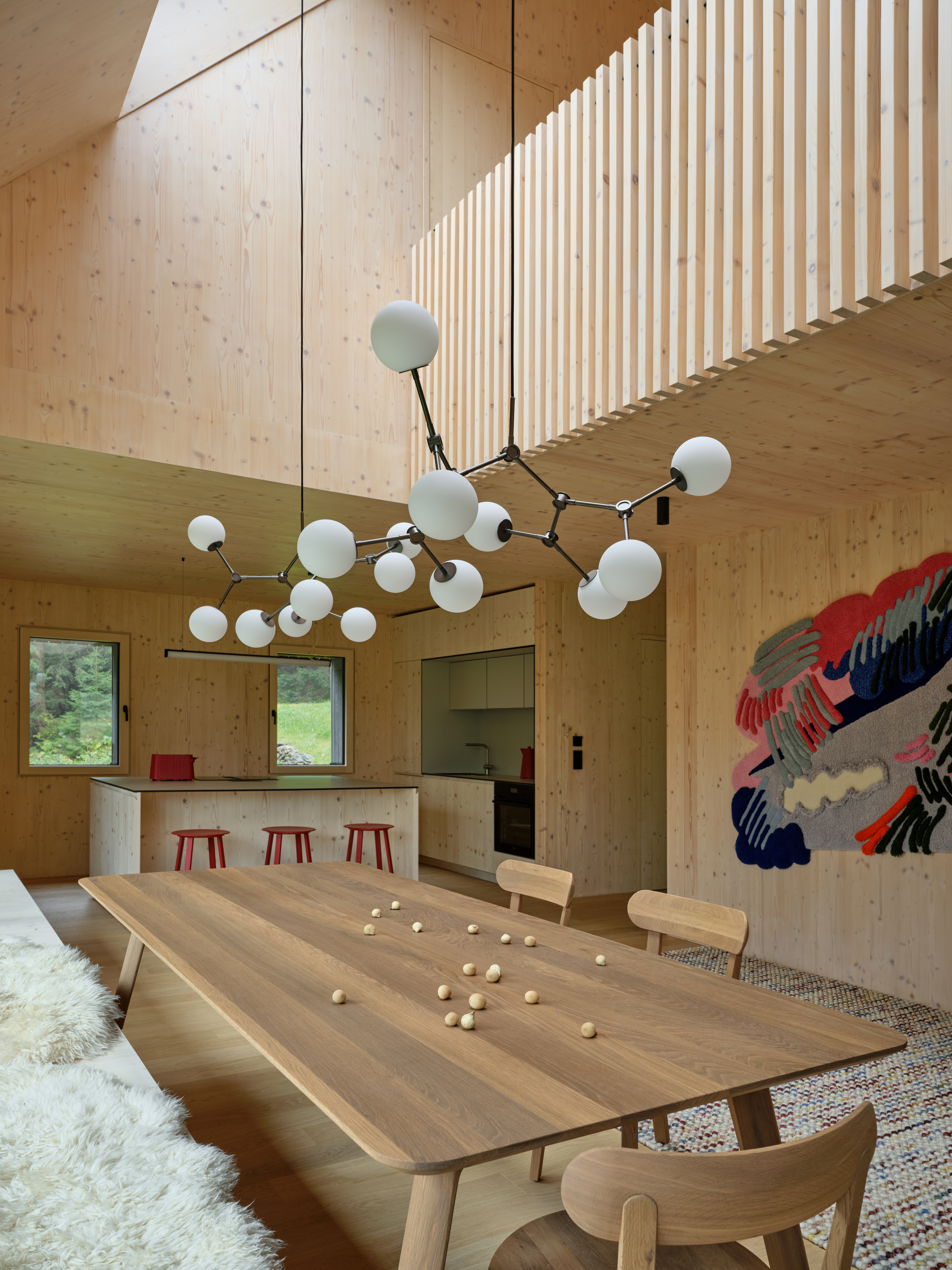
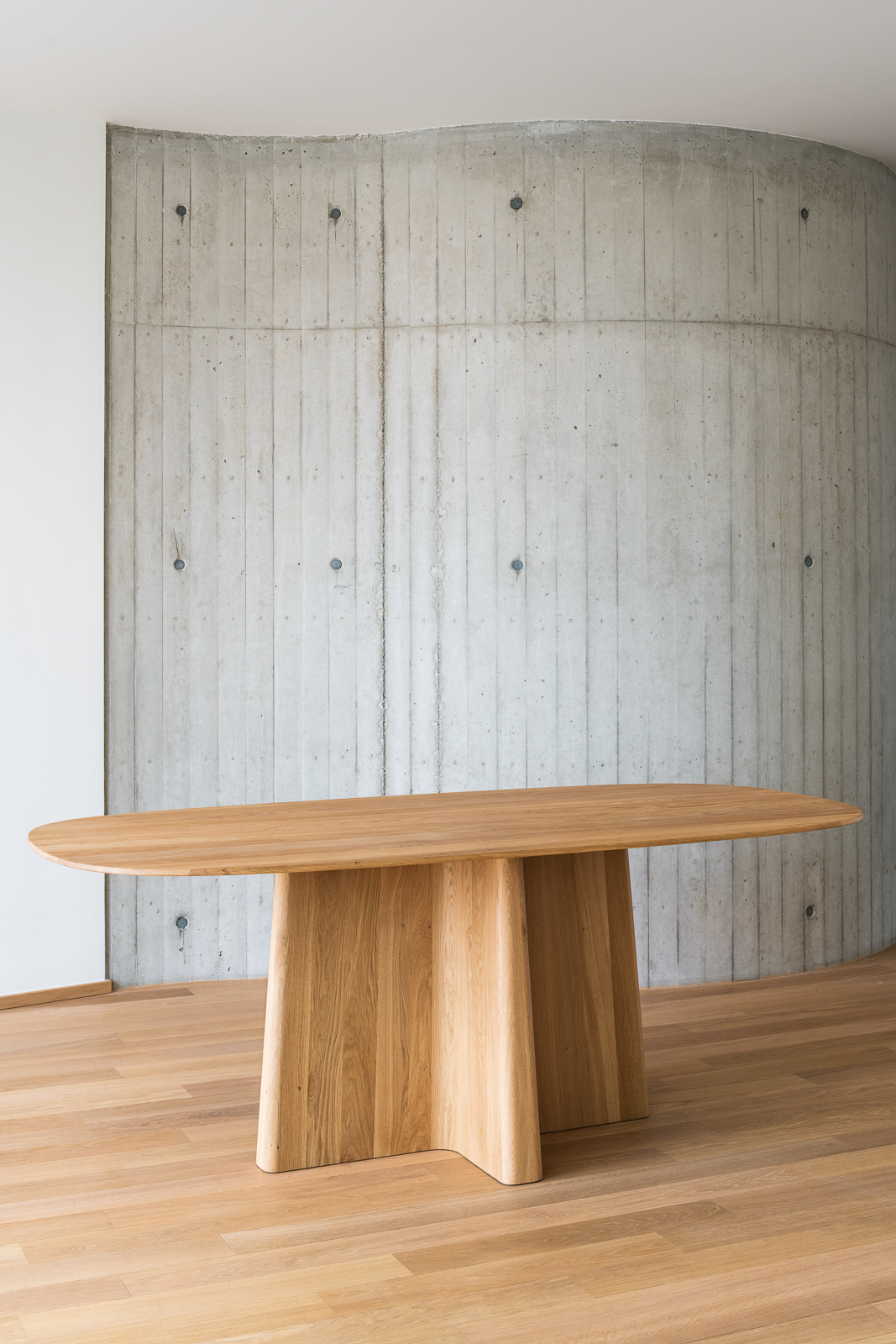
Yes. A dining table is one of the classic uses of solid oak.
A table is among the most frequently used pieces of furniture in a home. It must withstand everyday contact, weight, spilled liquids and repeated cleaning.
Oak offers strength, long service life and the possibility of future surface restoration. At the same time, it has an aesthetic quality particularly suited to a table: over time, its surface becomes a record of life in the home.
When choosing an oak table, it is worth looking not only at the thickness of the top, but especially at the base construction, joint design, drying process, surface finish and the way the construction accommodates the natural dimensional movement of solid wood.
Explore BeOak solid oak dining tables.
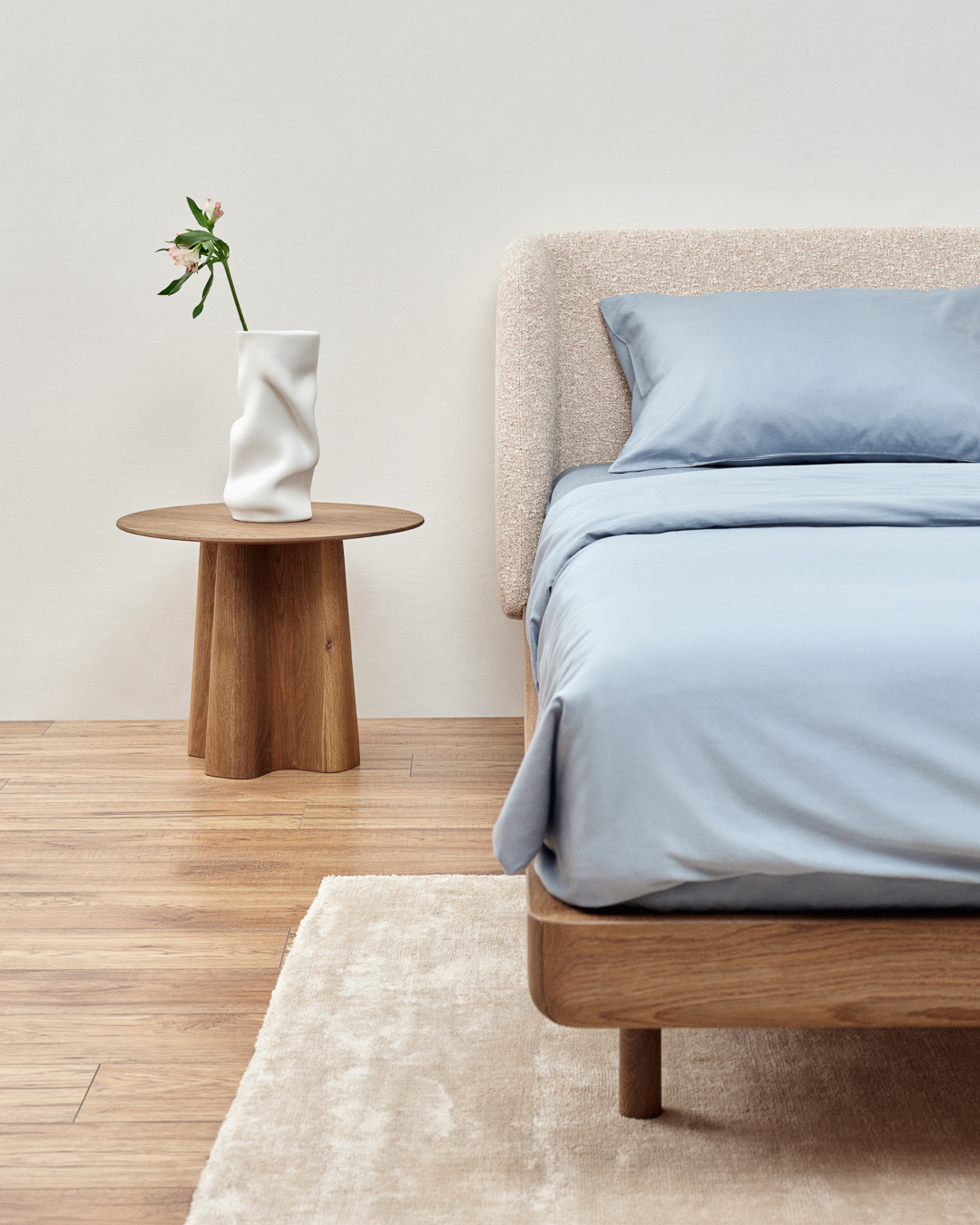
Solid oak is also very well suited to beds.
The strength of the material makes stable constructions possible, while its visual and tactile character fits naturally into a space intended for rest.
With an oak bed, it is particularly important to look at the frame construction, the quality of the joints, the slat support system and the way individual structural components are connected.
A well-designed construction can make use of the strength of solid wood while still appearing visually light.
Explore solid oak beds.
Yes, although “custom-made” does not necessarily mean developing a completely new product from the first sketch.
Contemporary furniture offers several levels of customisation. These can include choosing dimensions or finishes, changing a configuration, using a modular system adapted to a particular space or, for larger projects, developing an individual solution.
Modular storage systems make it possible to combine individual elements into bookcases, media units, chests of drawers, sideboards and other configurations.
The X-LINK and O-LINK systems use modular elements made from solid oak and allow compositions of different sizes to be created. X-LINK is based on clean geometry and sharper lines, while O-LINK uses rounded corners and a softer visual language.
Another option is FLEXIKLON, a configurable modular system that can be adapted to a particular space.
The advantage of modularity is that it combines an individual solution with a construction that has already been technically developed and tested.
When comparing manufacturers, the first impression of a product photograph does not necessarily tell you the most important things.
It is more useful to find out what the furniture is actually made from and where solid oak is used. Ask about the origin of the wood, the drying process, the construction of the joints and how the furniture accommodates the natural movement of the material.
The surface finish and long-term maintenance options also matter. A manufacturer of quality solid wood furniture should be able to explain how the surface should be cared for, what can be repaired locally and whether professional renovation is available.
The place of manufacture and the ability to control individual stages of production are equally important. With a natural material, the quality of the final product is not determined by one parameter but by the entire process from material selection to the final layer of finish.
Finally, consider the design itself. The longevity of furniture is not only a technical question. For a piece to serve for decades, it also needs to work aesthetically beyond short-lived trends.
Working with solid oak today does not have to mean a return to heavy or traditionally styled furniture.
Contemporary construction and manufacturing techniques make it possible to create lighter forms, organic curves, modular systems and technologically equipped furniture while preserving the essential character of the wood.
Solid oak can therefore form the basis of a dining table, bed, desk, chest of drawers or a complex storage system.
The material remains the same. What changes are the possibilities for working with it.
It is precisely in this dialogue between natural material, craftsmanship and contemporary technology that furniture can be created whose value does not end when it is placed in an interior.
Would you like to see and touch the material and different surface finishes in person? Book a visit to a BeOak showroom and explore the oak, construction details and finishes of individual products up close.
Solid oak means real oak wood used as the material of a particular structural component. Unlike oak veneer, the oak is not merely a thin decorative layer applied to another supporting material.
Solid oak forms the actual body of the component. Oak veneer is a thin layer of real oak applied to another supporting material. Both solutions can have a place in high-quality furniture, but they differ in construction and properties.
Yes. Thanks to its strength, durability and ability to be restored, oak is very well suited to dining tables. However, the quality of the construction, correctly dried timber and an appropriate surface finish are equally important.
Yes. Wood naturally absorbs and releases moisture according to the relative humidity of the surrounding air and can therefore expand or contract slightly. Temperature affects the process mainly indirectly through changes in relative humidity. A well-designed solid wood construction accounts for this movement.
No. Grain, colour, growth rings, knots and other natural characteristics vary from one piece of wood to another. This variation is a defining feature of natural solid timber.
In many cases, yes. The possibilities and method of restoration depend primarily on the construction and finish used. One of the advantages of solid wood is that its surface can often be renewed over the life of the furniture.
Its lifespan depends on the quality of the wood, drying, construction, workmanship, surface finish, maintenance and use. Well-made solid oak furniture can be designed for long-term use and can serve for generations.
Ask about the material used, the origin of the wood, the drying process, construction, joints, surface finish and long-term care options. A good manufacturer should be able to explain not only what the furniture is made from, but also why a particular construction solution has been chosen.
Yes. Some products allow you to choose dimensions and finishes, while modular systems can be configured in different ways to suit a particular interior. For larger projects, individually developed solutions may also be possible.
Yes. Modern CNC technologies make it possible to process solid wood three-dimensionally with great precision. Combined with knowledge of the material and traditional woodworking techniques, they expand the range of constructions and forms that can be created from solid oak.